
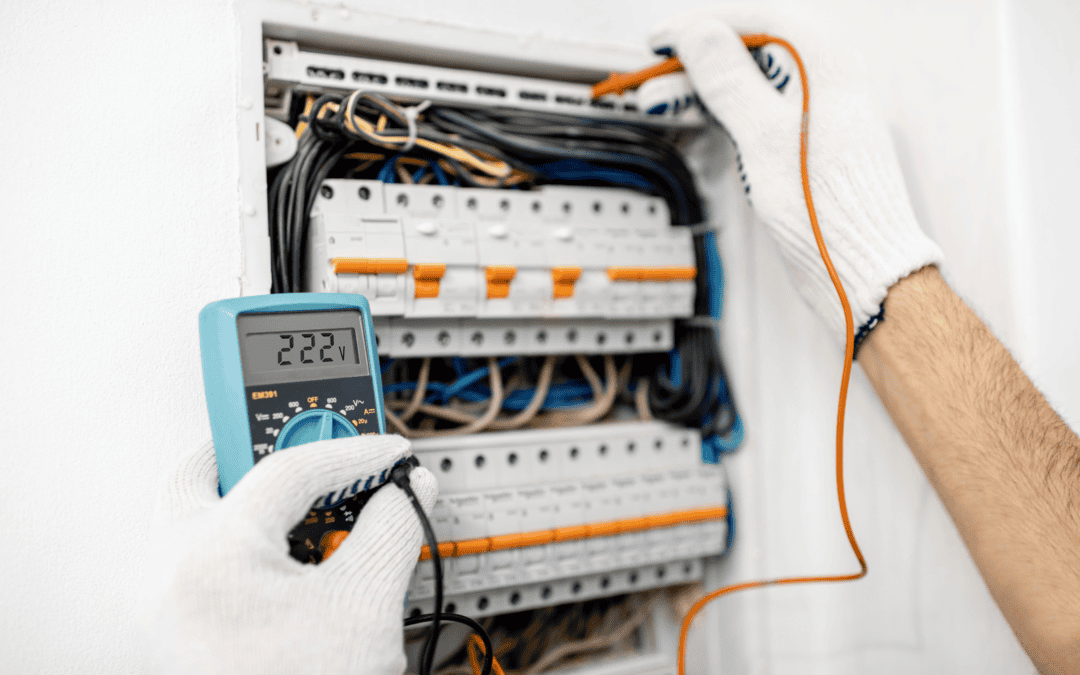
When your breaker keeps tripping, it means the circuit is shutting itself off to stop a dangerous flow of electricity, and that is a warning worth taking seriously. A breaker that keeps tripping is trying to protect your home from an overload, a short circuit, a ground fault, or an arc fault.
You do not have to guess what is wrong. We work on Triangle homes every week, and below we walk you through the real reasons a breaker trips, what you can safely check yourself, and when it is time to call a licensed electrician in Raleigh.
Key Takeaways
- A breaker that keeps tripping is doing its job and pointing you toward a real problem.
- Unplug what you added most recently, then reset the breaker one time.
- Never tape, wedge, or force a breaker to stay on.
- Repeated trips, warm outlets, burning smells, or buzzing mean you should stop and call a pro.
- Frequent tripping in an older home often points to an undersized panel that needs an upgrade.
What Does It Mean When Your Breaker Keeps Tripping?

A breaker keeps tripping because it senses too much current or a fault, and it cuts power to keep wires from overheating. In plain terms, the breaker is the safety valve for that circuit.
Every circuit has a limit, usually 15 or 20 amps in a home. When the load or a fault pushes past that limit, the breaker snaps to the off position on purpose.
So a trip is not the breaker failing. Most of the time, it is the breaker working exactly as designed.
Why Does My Circuit Breaker Keep Tripping?
Your circuit breaker keeps tripping for one of five common reasons: an overloaded circuit, a short circuit, a ground fault, an arc fault, or a worn-out breaker. Each one feels a little different, and each one has a different fix.
An Overloaded Circuit
An overloaded circuit is the most common cause, and it happens when too many devices pull power at once. Think space heaters, hair dryers, microwaves, and window air conditioners all on the same circuit.
The breaker usually trips a few minutes after the heavy load starts. Move some devices to another circuit, and the trips often stop.
A Short Circuit
A short circuit happens when a hot wire touches a neutral wire, and it lets a huge surge of current flow. This trip is instant and forceful.
You might see a scorch mark, smell burning plastic, or notice a specific cord or appliance is the trigger. A short circuit needs a professional look, since it can start a fire.
A Ground Fault
A ground fault is similar to a short, but the hot wire touches a ground wire or a grounded metal box. These are common in damp areas like kitchens, baths, garages, and outdoors.
A GFCI outlet or GFCI breaker is built to catch this fast. If a GFCI keeps tripping, treat it as a real signal, not a nuisance.
An Arc Fault
An arc fault is a dangerous spark that jumps across damaged or loose wiring, and it can ignite nearby material. An AFCI breaker is designed to sense that spark and cut power.
According to the Electrical Safety Foundation International, arcing faults are responsible for starting more than 28,000 home fires each year in the United States. That is why an AFCI trip deserves your full attention.
A Failing or Outdated Breaker
Sometimes the breaker itself is worn out, and it trips at a lower load than it should. Breakers age, and older panels can lose reliability over time.
If one breaker trips with almost nothing plugged in, the device may be bad. We can test it and replace it safely.
Breaker Trip Types at a Glance
| Trip Type | What It Feels Like | Common Location | Safe to Reset Once? |
|---|---|---|---|
| Overloaded circuit | Trips after a few minutes of heavy use | Kitchen, living room, bedrooms | Yes, after reducing the load |
| Short circuit | Trips instantly, may smell or scorch | Any outlet or appliance | No, call a pro |
| Ground fault | Trips near water or moisture | Kitchen, bath, garage, outdoors | Once, then call if it repeats |
| Arc fault | Trips with no clear overload | Bedrooms and living areas | Once, then call if it repeats |
| Failing breaker | Trips with little or nothing plugged in | At the panel | No, have it tested |
How Do You Reset a Breaker That Keeps Tripping?
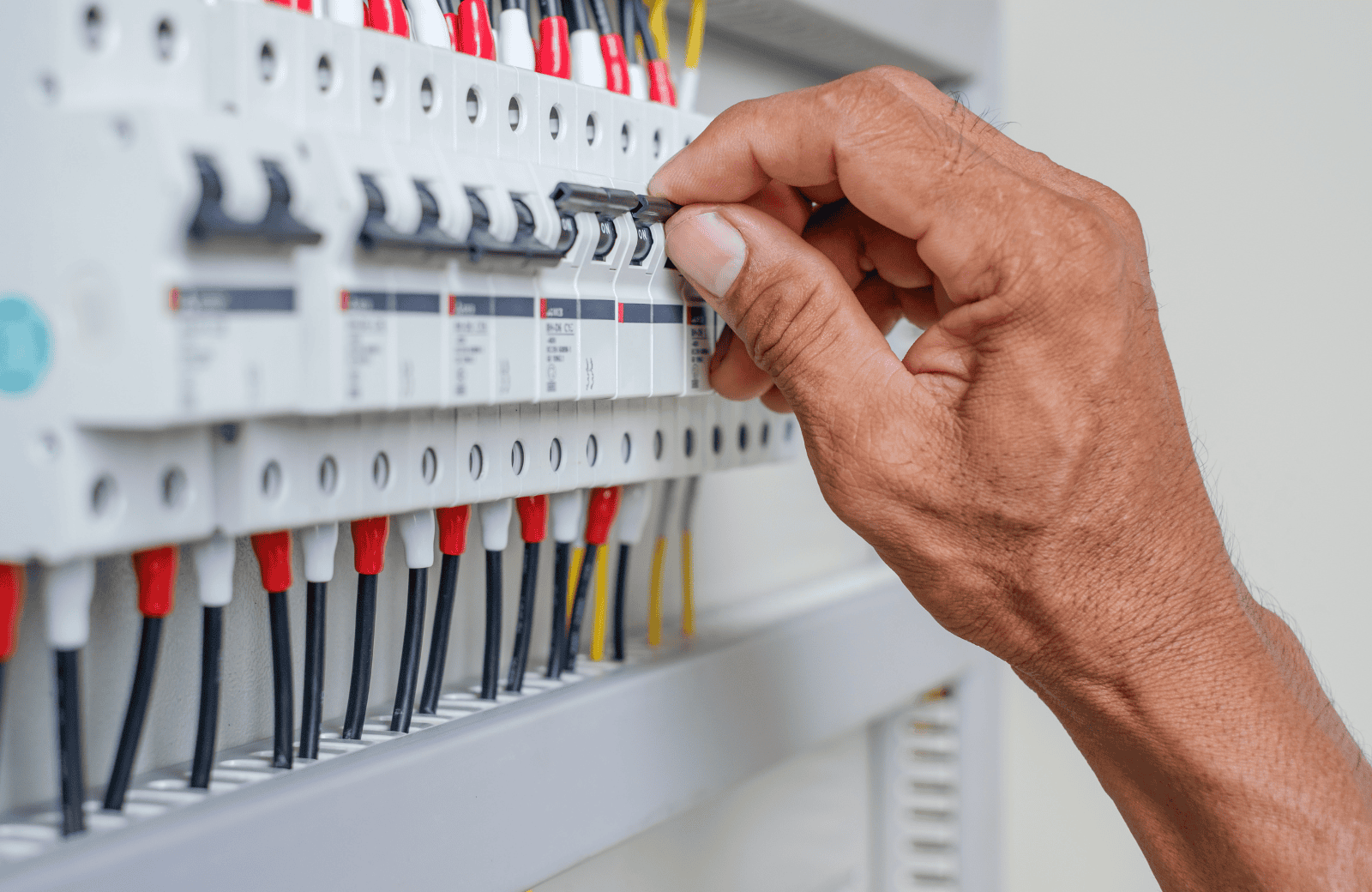
You reset a breaker by moving it fully to the off position first, then firmly back to the on position. A tripped breaker sits in the middle position, so you have to clear it before it will hold.
Here is the safe order to follow at home:
- Unplug or switch off the device you turned on right before the trip.
- Go to the panel and find the breaker that is out of line with the others.
- Push it firmly to off, then back to on.
- Wait and watch to see if it holds.
If it holds and stays on, you likely had a simple overload. If it trips again right away, stop and do not keep resetting it.
How Do You Find Which Breaker Keeps Tripping?
You find the tripped breaker by opening the panel and looking for the one switch that sits out of line with the rest. A tripped breaker rests in the middle, not fully on and not fully off.
Some panels label each breaker, and some do not. If yours is a mystery, a little detective work helps a lot.
Map Your Circuits
Walk through your home and note what lost power when the breaker tripped. That tells you which rooms and outlets share the circuit.
Write the rooms next to each breaker so you have a map for next time. We can also label your panel clearly during a service visit.
Test One Load at a Time
Unplug everything on that circuit, then reset the breaker. Add one device back at a time and watch for the trip.
When the breaker trips as a certain device turns on, you’ve found your clue. That device or its outlet is the likely culprit.
What Should You Never Do When a Breaker Keeps Tripping?
You should never force a breaker to stay on, and you should never swap in a larger breaker to stop the trips. Both moves remove the safety that protects your home from fire.
A breaker is sized to match the wire behind it. A bigger breaker lets the wire overheat before it ever trips.
Avoid These Common Mistakes
- Taping or wedging a breaker in the on position.
- Installing a higher-amp breaker on the same wire.
- Resetting the same breaker again and again.
- Ignoring heat, smell, or sound at the panel.
- Overloading power strips to work around a dead outlet.
These shortcuts feel easy in the moment, but they raise your risk fast. The safe path is to find the cause and fix it right.
Which Breaker Trips Are Safe to Handle and Which Need Help?
A single trip after plugging in a big appliance is usually safe to reset once. Repeated trips, or trips with heat, smell, or sound, are not safe to chase on your own.
Reset one time only in these cases:
- You clearly overloaded the circuit, and you can reduce the load.
- A storm or brief surge caused a one-time trip.
Call a licensed electrician when you see any of these:
- The same breaker trips again and again.
- You smell burning or see scorch marks.
- Outlets or the panel feel warm to the touch.
- You hear buzzing, sizzling, or crackling.
- A GFCI or AFCI breaker keeps tripping.
What Warning Signs Should You Never Ignore?
Warm cover plates, burning smells, buzzing sounds, and breakers that will not stay on are signs of a real hazard, and they call for a professional. These are the clues that a wiring problem is heating up behind your walls.
Home electrical fires are not rare. The Electrical Safety Foundation International reports that home electrical fires account for an estimated 51,000 fires each year, causing hundreds of deaths and more than a billion dollars in property damage.
The National Fire Protection Association also points to electrical failures and malfunctions as a leading cause of home structure fires, with the risk climbing in the colder months when we run more heaters and lights. You can read more on the NFPA electrical home fire safety page.
When you see these warning signs, our licensed team can trace the fault during a full visit to our electrical panel and safety services for Raleigh homes.
How Can You Stop a Breaker From Tripping Again?
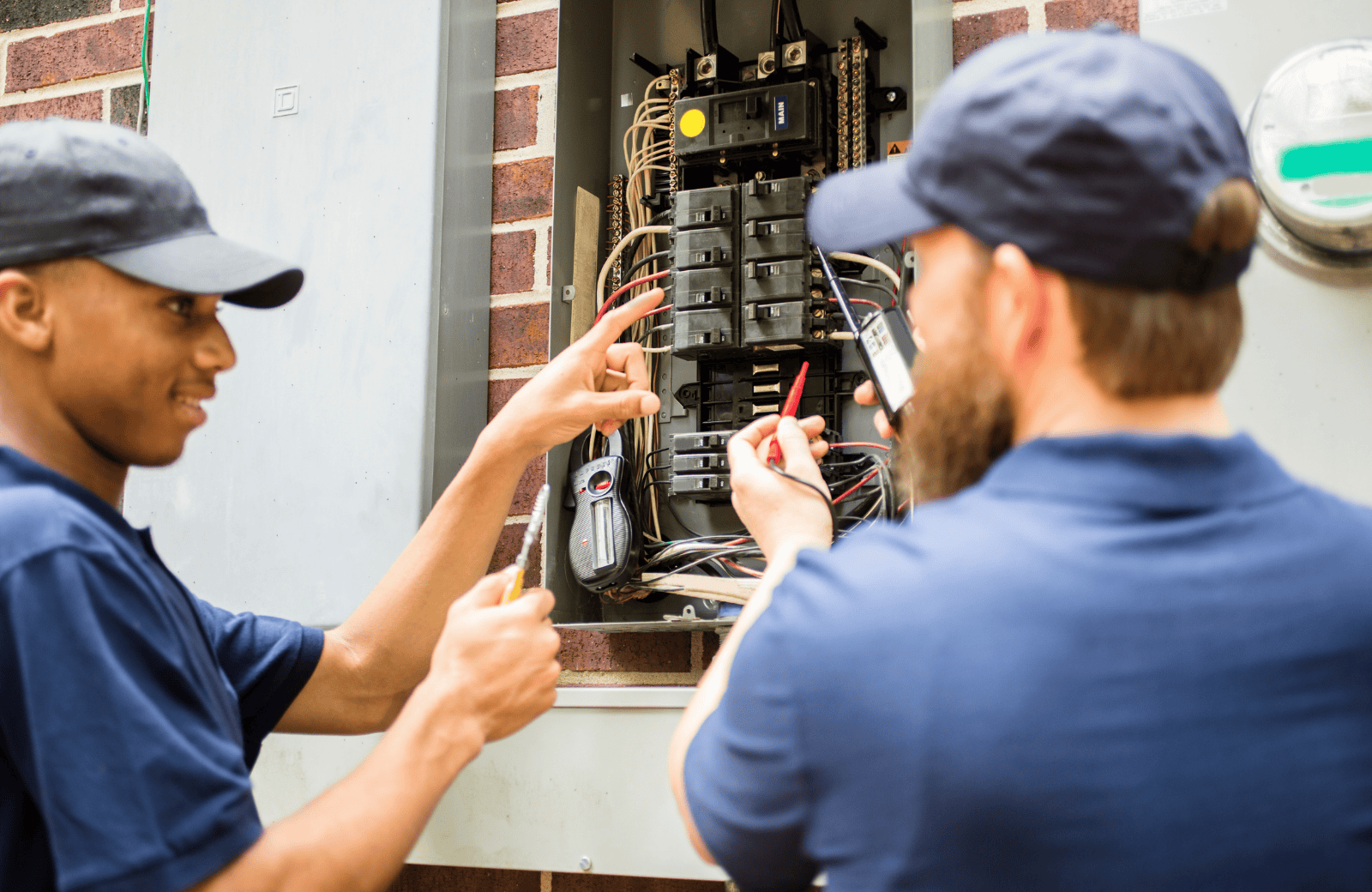
You stop repeat trips by fixing the root cause, not by resetting over and over. That means balancing your loads, repairing faults, and making sure your panel fits how you actually live.
Spread Out Your Heavy Loads
Move high-draw devices onto different circuits so no single breaker carries too much. Space heaters and window units are the biggest offenders in Triangle homes.
A dedicated circuit for a heavy appliance often solves the problem for good. We can add one where it makes sense.
Repair Faulty Wiring and Devices
Loose connections, damaged cords, and aging outlets create shorts, ground faults, and arc faults. Fixing these removes the source of the trip.
The Consumer Product Safety Commission notes that electrical receptacles alone are involved in thousands of home fires each year. Replacing a worn outlet is a small job that carries a big safety payoff.
Upgrade an Undersized Panel
Older homes were wired for far less power than we use today. If your panel is small or full, breakers trip because the whole system is stretched thin.
A modern panel gives you room for EV chargers, heat pumps, and new circuits. You can learn how we handle this on our panel and safety services page.
When Should You Call an Electrician in Raleigh?
You should call an electrician when trips repeat, when you notice heat, smell, or sound, or when you simply are not sure the circuit is safe. Guessing with electricity is not worth the risk to your family or your home.
We serve homeowners across Raleigh and the wider Triangle, and we handle these calls all the time. Our team finds the fault, explains it in plain language, and fixes it to code.
Can Routine Electrical Maintenance Prevent Trips?
Yes, regular maintenance catches loose connections and worn parts before they trip a breaker or start a fire. A quick inspection now saves you from an emergency later.
We check your panel, test your breakers, and tighten connections during a safety visit. Older homes in the Triangle benefit from this the most.
Think of it like a tune-up for your electrical system. Small fixes keep the whole home running safely for years to come.
Frequently Asked Questions
Is it dangerous if my breaker keeps tripping?
Yes, repeated tripping can point to a short circuit, ground fault, or arc fault that carries a fire risk. One trip from an overload is usually minor, but a breaker that trips again and again needs a professional look.
Why does my breaker trip only when I use certain appliances?
That usually means the appliance overloads the circuit or the appliance itself has an internal fault. Try moving it to another circuit, and if it still trips, the appliance or the wiring likely needs service.
Can I just replace the breaker with a bigger one?
No, installing a larger breaker without upsizing the wire is a serious fire hazard. The breaker must match the wire it protects, so the right fix is to add a circuit or correct the fault.
Why does my breaker trip at night with nothing running?
A trip with almost no load often points to a failing breaker or a hidden ground fault or arc fault. Moisture, pests, and damaged wiring can all cause this, so it is worth a professional diagnosis.
How much does it cost to fix a breaker that keeps tripping?
The cost depends on the cause, from a simple outlet repair to a full panel upgrade. We start with a free estimate so you know the price before any work begins.
Does a tripping GFCI mean the same thing as a tripping breaker?
A GFCI trips to protect you from shock in damp areas, while a standard breaker trips to protect the wiring from overload. Both matter, and a GFCI that trips repeatedly still needs to be checked by a pro.
Get Your Breakers Working Safely Again in the Triangle
A breaker that keeps tripping is your home asking for help, and we are ready to answer that call. We turn a stressful, blinking panel into a safe, reliable system you can trust every day.
Why Triangle Homeowners Call Us
We are licensed, insured, and fully code compliant, and we handle the permits and inspections for you. We stand behind our work with a workmanship warranty and honest, plain-language answers.
We give you a real diagnosis, not guesswork, and a fix that lasts. That is how we protect the families we serve across Raleigh and the Triangle.
Book Your Free Estimate Today
Do not keep resetting a breaker and hoping it holds. Call us at (919) 229 9778, and we will get you scheduled quickly.
You can also reach us through our contact page to request your free estimate. Let us make your home safe, one circuit at a time.