
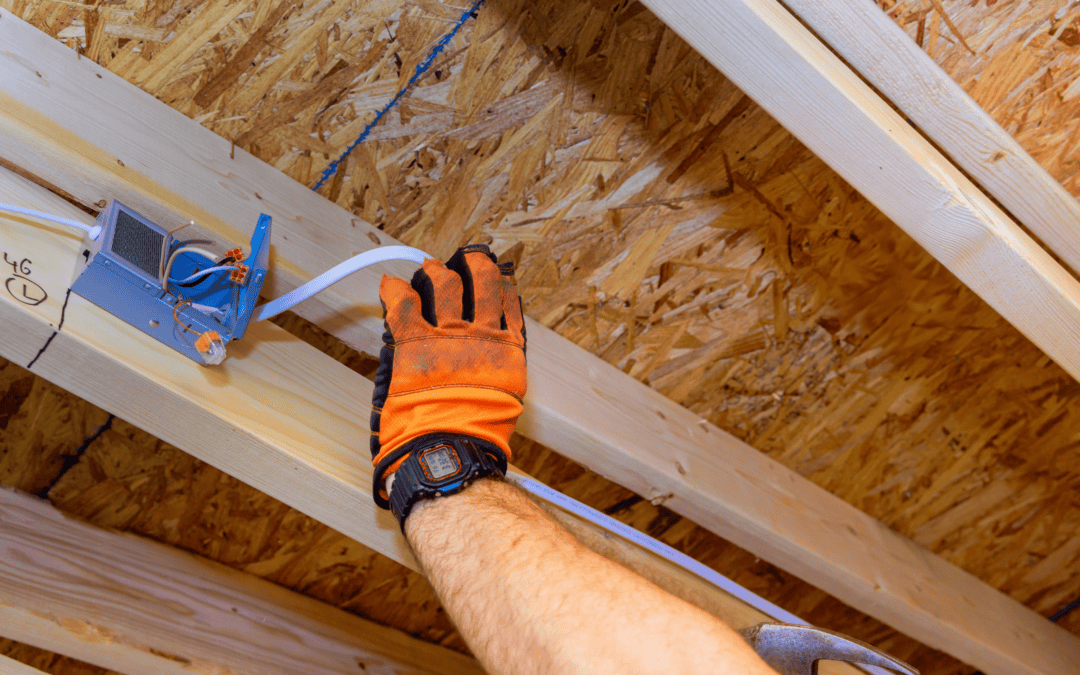
The recessed lighting installation cost runs about 100 to 300 dollars per fixture installed in a finished ceiling, with most Triangle homeowners landing near 180 dollars per light. That price covers the housing, the trim, the wiring, and the labor.
New construction is cheaper because the ceiling is open. Retrofitting into a finished ceiling adds roughly 20 to 30 percent, since the work involves cutting, fishing wire, and patching.
Before you call anyone, five minutes of prep makes your quote far more accurate.
- Measure the room and note the ceiling height. Both drive the fixture count.
- Check whether there is attic space above the ceiling or another floor.
- Decide if you want dimming, because that changes the switch and sometimes the wiring.
- Look at what the room is for, since a kitchen needs brighter, tighter spacing than a bedroom.
- Count the existing switches, so you know what already controls the space.
What Does Recessed Lighting Installation Cost In 2026?
Plan on 100 to 300 dollars per light for most residential work. A six light kitchen typically totals 900 to 1,800 dollars, and a full first floor can run 3,000 to 6,000 dollars.
Labor is the larger half of that number in a finished home. The fixtures themselves are often 20 to 60 dollars each.
What The Price Per Fixture Includes
- The housing and the trim, matched to your ceiling depth
- Cutting the opening cleanly and to the right diameter
- Running and securing cable to each fixture
- Connecting to an existing circuit or a new one where the load requires it
- Setting the switch or dimmer and testing every fixture
- Cleanup, because drywall dust travels further than anyone expects
What Moves The Price Up Or Down
| Situation | Effect on cost per light | Reason |
|---|---|---|
| Open ceiling in new construction | Lowest, often 60 to 120 dollars | No cutting, no fishing, no patching |
| Finished ceiling with attic above | Middle, often 120 to 220 dollars | Wire runs from above, minimal repair |
| Finished ceiling with a floor above | Highest, often 200 to 350 dollars | Every run is fished blind from below |
| Ceilings over nine feet | Add 15 to 40 dollars | Staging, lifts, and slower placement |
| Sloped or vaulted ceiling | Add 25 to 60 dollars | Angled housings and trickier alignment |
| New dedicated circuit required | Add 250 to 700 dollars total | Panel work, breaker, and a home run cable |
| Plaster or concrete ceiling | Add 40 to 100 dollars | Slower cuts and more repair |
None of that is guesswork on our end. We look at the ceiling, check what is above it, and price the job we can actually see.
How Many Recessed Lights Does A Room Need?
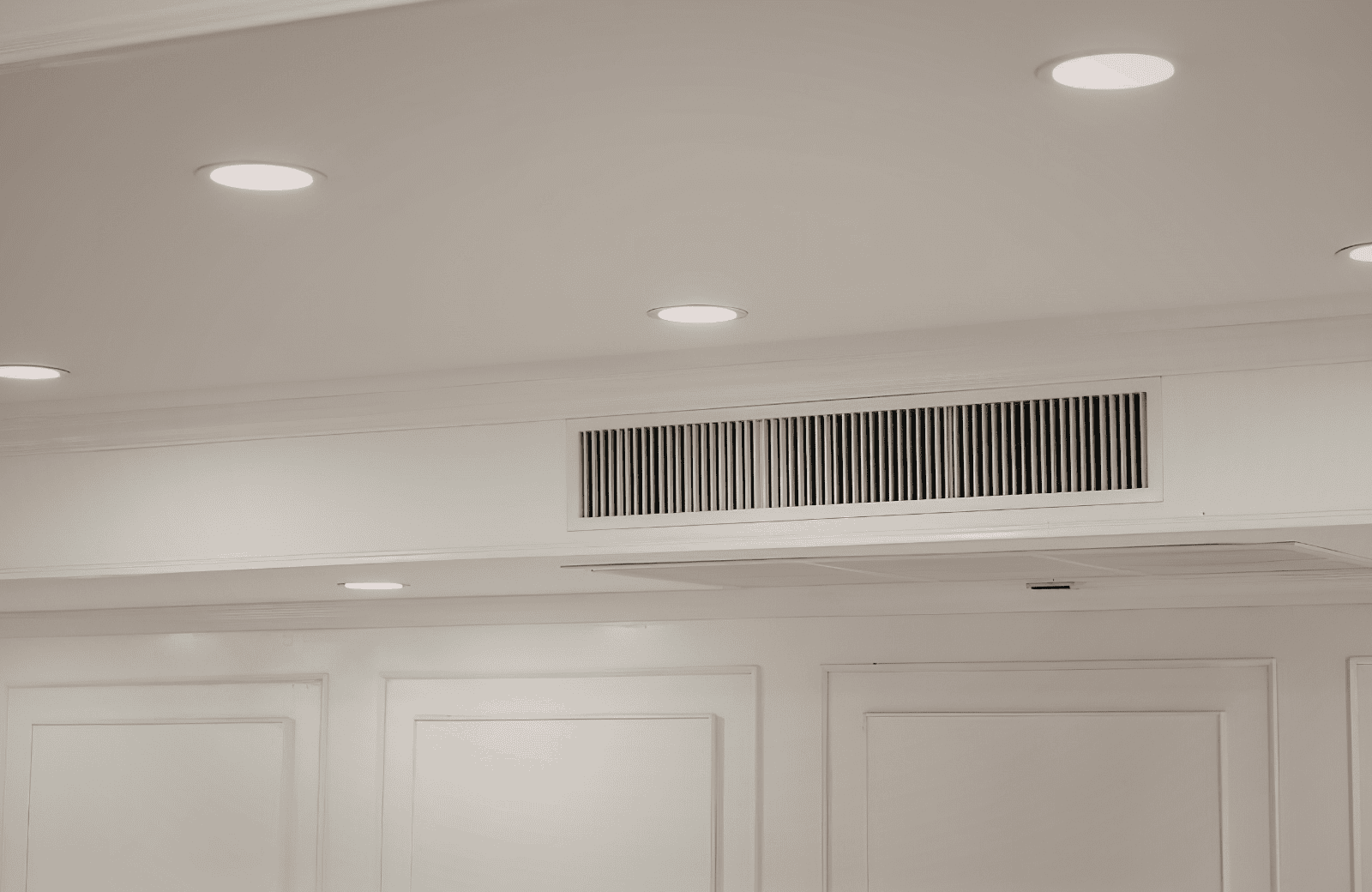
A practical rule is one light for every 20 to 25 square feet of general lighting, spaced about half your ceiling height apart. A twelve by fifteen foot living room usually wants seven to nine fixtures.
Kitchens and workspaces need more. Bedrooms and hallways need fewer, because even lighting matters less than soft lighting there.
| Room | Approximate size | Typical fixture count | Notes |
|---|---|---|---|
| Kitchen | 12 by 14 feet | 6 to 9 | Add task lights over the sink and island |
| Living room | 14 by 18 feet | 8 to 10 | Pair with lamps for evening layers |
| Primary bedroom | 13 by 15 feet | 4 to 6 | Keep fixtures off the bed to avoid glare |
| Bathroom | 8 by 10 feet | 2 to 4 | Wet rated trims over showers and tubs |
| Hallway | 4 by 20 feet | 3 to 4 | Space evenly down the center line |
| Home office | 10 by 12 feet | 4 to 6 | Aim for even light with no desk shadow |
Those are starting points, not rules. We walk the room with you and adjust for windows, cabinets, and where you actually sit.
What Is The Difference Between Can And Canless Recessed Lights?
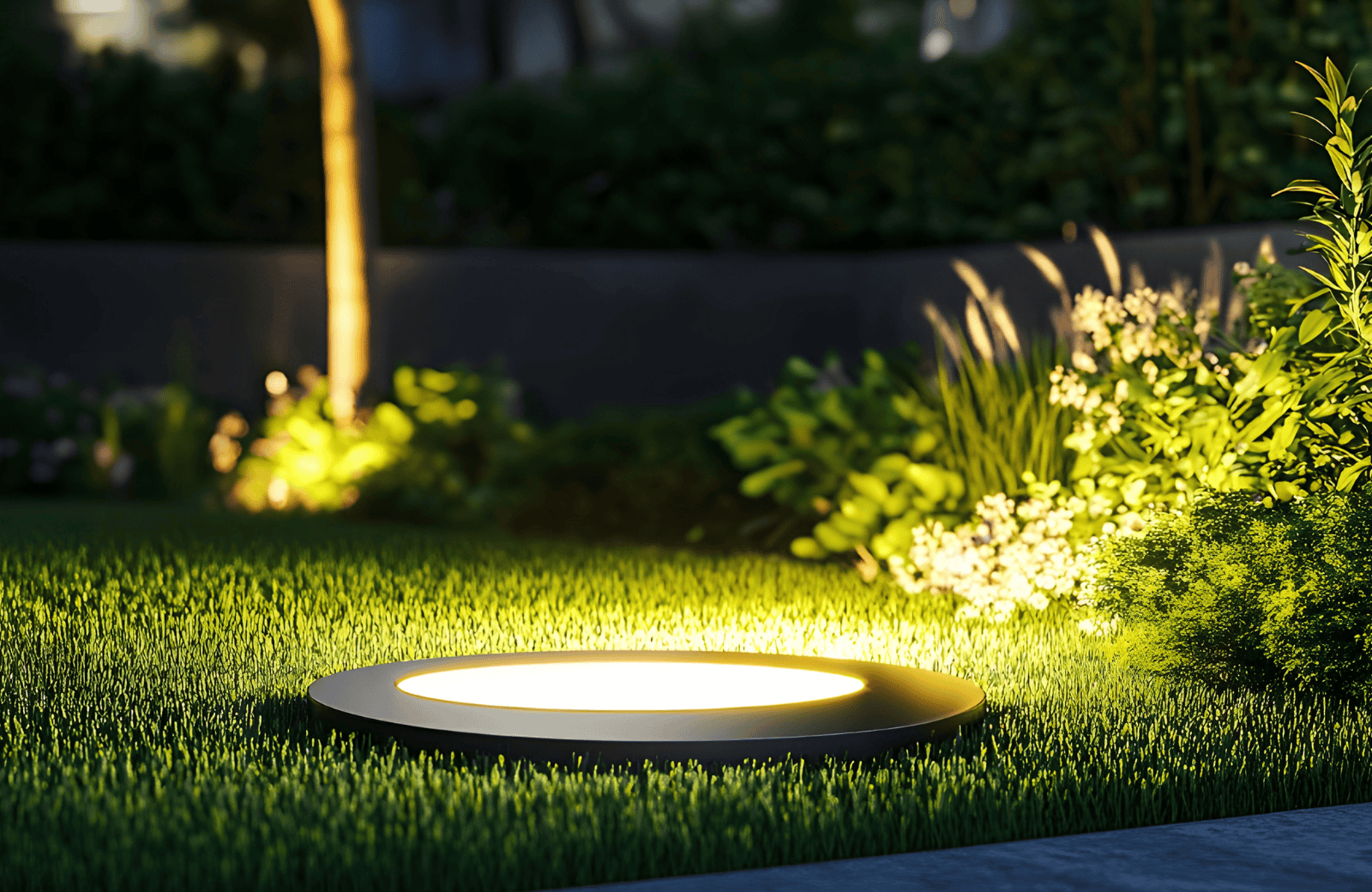
A can light uses a metal housing in the ceiling with a separate bulb or LED module. A canless light is a slim integrated LED that clips into the ceiling cut with a small junction box beside it.
Both are good options in 2026. Which one fits depends on your ceiling and how long you plan to stay.
| Factor | Can housing | Canless LED |
|---|---|---|
| Ceiling depth needed | 5 to 7 inches | 2 to 3 inches |
| Install speed | Slower | Faster |
| Insulation contact | Needs an IC rated housing | Most are IC rated already |
| Replacing a failed light | Swap the bulb or module | Replace the whole unit |
| Trim style options | Very wide selection | Growing but narrower |
| Typical fixture price | 25 to 70 dollars | 20 to 55 dollars |
If your joist bays are shallow or you have ductwork in the way, canless usually wins. If you want a specific trim look or an adjustable eyeball fixture, cans still offer more choices.
Does Recessed Lighting Actually Save Money On Energy?
Yes, when you switch from older bulbs to LED, though the savings are steadier than dramatic. Lighting is a modest share of a home energy bill, so the win shows up over years rather than months.
The U.S. Energy Information Administration reports that lighting accounted for about 6 percent of electricity use in American homes, or roughly 81 billion kilowatt hours, and about 17 percent of electricity use in commercial buildings. For a business, that share is large enough that a lighting retrofit changes the monthly number in a visible way.
Adoption has moved fast. According to EIA data published in March 2026, 90 percent of U.S. households now report using LED bulbs, and the share of homes using mostly LED lighting climbed from 4 percent in 2015 to 63 percent in 2024.
Where The Savings Actually Come From
- Lower wattage for the same light output, often 10 to 12 watts replacing 65
- Far longer service life, which cuts replacement trips and ladder time
- Less heat in the room, which slightly eases summer cooling load
- Dimming, which reduces draw whenever you run the lights below full
For a commercial space in Raleigh or Durham running lights twelve hours a day, those four factors add up quickly. For a bedroom used two hours an evening, the real benefit is comfort and bulb life.
How Do You Choose Brightness And Color Temperature?
Pick brightness by room function and color temperature by mood. Most living spaces land around 2700K to 3000K, while kitchens, garages, and workspaces do better at 3000K to 4000K.
Lumens matter more than watts now. A modern recessed LED producing 800 lumens draws about 10 watts and replaces what used to be a 65 watt bulb.
A Simple Guide By Room
| Space | Color temperature | Lumens per fixture | Feel |
|---|---|---|---|
| Bedroom | 2700K | 500 to 700 | Warm and restful |
| Living room | 2700K to 3000K | 600 to 800 | Warm but clear |
| Kitchen | 3000K to 3500K | 800 to 1,000 | Crisp and clean |
| Bathroom | 3000K to 4000K | 700 to 900 | Accurate for grooming |
| Garage or shop | 4000K | 1,000 or more | Bright and neutral |
| Office or retail | 3500K to 4000K | 800 to 1,200 | Alert and even |
Two Details People Wish They Had Known
Keep the color temperature consistent within a sight line. Mixing 2700K and 4000K fixtures in one open plan space looks like a mistake even when nobody can name why.
Watch the color rendering index as well. A rating of 90 or higher keeps paint, wood, and food looking like themselves, and it costs very little more than a rating of 80.
Selectable Fixtures Are Worth Considering
Many current recessed LEDs include a small switch that changes color temperature and sometimes brightness. That flexibility means you can settle the look after the fixtures are in and the room is furnished, rather than guessing from a store shelf.
Can Recessed Lighting Go In Any Ceiling?
Most ceilings work, but a few need a different approach. The limits are depth, insulation, and what is hiding above the drywall.
Ceilings That Need Extra Planning
- Shallow joist bays, where only canless or ultra thin housings fit
- Ceilings under a bathroom or laundry, where plumbing crowds the bays
- Vaulted and cathedral ceilings, which need sloped housings to aim light correctly
- Plaster and lath, which cracks if the cut is rushed
- Fire rated ceilings in condos and commercial buildings, which require rated assemblies
Insulation contact matters too. A fixture that touches insulation has to be IC rated, and installing a non rated housing against blown insulation creates a genuine fire risk.
Where We Suggest Something Other Than Recessed
- Rooms with a very low ceiling, where surface mounted LED discs read better
- Spaces where you want a focal point, which calls for a pendant or a chandelier
- Under cabinet zones, which need dedicated task strips rather than ceiling light
How Long Does A Recessed Lighting Install Take?
Most single room jobs finish in one day. Whole floor projects usually take two to three days depending on access and fixture count.
| Stage | Typical timing | What happens |
|---|---|---|
| Walkthrough and layout | 30 to 60 minutes | We mark fixture positions and confirm spacing |
| Circuit check | 15 to 30 minutes | We verify the existing circuit can carry the load |
| Cutting and rough wiring | 2 to 4 hours per room | Openings cut, cable run and secured |
| Fixture and trim install | 1 to 2 hours per room | Housings set, trims fitted, everything aligned |
| Switch, dimmer, and testing | 30 to 60 minutes | Controls wired, dimming verified, cleanup done |
The layout step is the one worth slowing down for. Fixtures placed by eye instead of by measurement are the thing homeowners notice for years afterward.
Do You Need A Permit For Recessed Lighting?
Often yes in the Triangle, especially when the job adds a circuit or alters existing wiring. Swapping a trim on an existing fixture generally does not need one.
The safest answer is that we check for you. Requirements differ between Raleigh, Cary, Durham, and the surrounding towns, and we file whatever your jurisdiction requires as part of the job.
What A Proper Install Follows
- IC rated and air tight housings wherever insulation is present
- Wet rated or damp rated trims in showers, tubs, and covered porches
- Correct box fill and secured cable at every fixture
- Dimmers matched to the specific LED trim to prevent flicker
- Load added within the capacity of the circuit, verified rather than assumed
Our recessed lighting installation work follows all five every time, whether it is four lights in a bedroom or forty across an office.
Frequently Asked Questions
How much does it cost to add six recessed lights to a kitchen?
Most Triangle kitchens land between 900 and 1,800 dollars for six lights in a finished ceiling. The number moves with ceiling height, attic access, whether you want dimming, and whether the circuit can carry the additional load. New construction with open framing costs noticeably less per fixture.
Is canless recessed lighting cheaper to install?
Usually yes, by roughly 20 to 40 dollars per fixture in labor. Canless units are shallower and clip straight into the ceiling cut, which speeds up the work in tight joist bays. The tradeoff is that the whole unit gets replaced when the LED eventually fails, rather than just a bulb.
Can recessed lights be installed without attic access?
Yes. We fish the wiring through the ceiling from below using remodel housings designed for exactly that situation. It takes longer and costs more per light than an attic run, and it sometimes means a small access cut we patch afterward.
Do recessed lights need to be on a dimmer?
They do not have to be, but almost everyone prefers them that way. If you add dimming, the dimmer has to be rated for the specific LED trims you install, or you get flicker and buzzing. Matching the dimmer to the fixture is the single most common thing we correct on other people work.
How far apart should recessed lights be spaced?
A reliable starting point is to divide your ceiling height by two. An eight foot ceiling suggests roughly four feet between fixtures, and a ten foot ceiling suggests about five. We adjust from there based on where counters, artwork, and seating actually sit.
Will recessed lighting raise my home value?
It rarely appraises as a line item, but it changes how a room shows. Buyers notice even lighting and a clean ceiling, and dark rooms are one of the most common complaints in listing feedback. Treat it as a livability upgrade first and a resale benefit second.
How We Plan Recessed Lighting For Triangle Homes And Businesses
We have spent more than 15 years lighting kitchens, offices, and retail spaces across Raleigh, Cary, Wake Forest, Holly Springs, Apex, Durham, Garner, Clayton, and Fuquay Varina. Good lighting is design work as much as electrical work, and we treat it that way.
Layout First, Fixtures Second
We start by walking the room with you and marking the ceiling before anything gets cut. You see the plan while it is still a set of pencil marks, which is the cheapest possible time to change your mind.
Pricing You Can Read
You get a per fixture price and a total, with any circuit work called out separately. Nothing gets added to the invoice that you did not approve first.
Clean Work In Finished Rooms
We protect floors and furniture, cut carefully, and leave the room ready to use rather than ready to clean. Every fixture gets tested and every dimmer gets checked for flicker before we pack up.
Ready To Light The Room Properly
If a room in your home or business has never felt bright enough, we can show you what the right layout would look like and what it would cost. Call us at (919) 229-9778 or send a note through our contact page and we will get you on the calendar.
Every service visit includes a free outlet and switch inspection, so you learn what else is going on behind your walls while we are already there. You can also see more about our recessed lighting installation services and the rooms we light most often.