

Ceiling fan installation cost comes down to one question more than any other: what is already waiting in your ceiling? When a fan rated box and a working switch are in place, the swap is quick. The price stays low. When we start from bare drywall, the number climbs. The job now includes new cable, a new box, and a new switch.
Most homeowners in the Triangle land somewhere in the middle. You have an old light fixture you want to replace. Or a fan that wobbled for three summers and finally quit.
Here is the honest version of how pricing works. You will also see what to check yourself and where people get surprised. No mystery, no guesswork.
Do This Today Before You Call Anyone
- Look up at the fixture in question and note whether a fan already hangs there or only a light.
- Measure your ceiling height from the floor to the ceiling in that room.
- Count the switches on the wall that control that fixture.
- Measure the room so you can match fan size to the space.
- Write down anything odd you have noticed, such as flickering, buzzing, or a wobble.
Those five answers turn a vague phone call into an accurate estimate. They also tell you fairly quickly whether your project is simple or involved.
What Does Ceiling Fan Installation Cost Actually Cover?
Ceiling fan installation cost covers labor, materials, and the safety work behind the fan. That work keeps it on your ceiling for fifteen years. The fan itself is usually a separate purchase, and it accounts for a large share of what you spend overall.
Three project types sit behind almost every estimate we write. Knowing which one you have removes most of the uncertainty.
Replacing a Fan That Already Exists
This is the least expensive scenario by a wide margin. The wiring, the box, and the switch are all in place and already sized for a fan.
Our work is removal, inspection of the existing box and connections, and a clean install of the new unit. Most single fan swaps run 150 to 350 dollars in labor. Ceiling height and the old mounting method move that figure.
Replacing a Light Fixture With a Fan
This one looks simple and often is not. A standard light fixture box is not built to carry a spinning, vibrating load.
The box has to be replaced with a fan rated box that is anchored to structure. One switch on the wall means one control. If you want the light and fan controlled separately, we address the switch wiring too. Expect a typical range of 250 to 500 dollars in labor for this work.
Adding a Fan Where Nothing Exists
New installation is the most involved and the most variable. We run new cable from a suitable circuit and cut in a fan rated box. Then we install a switch and patch what we open.
Attic access above the room makes a real difference here. A room with open attic above it is easy to serve. A first floor room in a two story house is not. Labor commonly lands between 400 and 900 dollars, and complicated routing can push past that.
What Drives the Price Up or Down?
Two houses on the same street can get very different numbers for what sounds like the same job. These are the factors that explain the gap.
Ceiling Height and Access
Standard eight and nine foot ceilings are straightforward. Vaulted, cathedral, and two story ceilings need taller equipment and a downrod. Safe handling often calls for a second technician.
The Department of Energy recommends mounting fans so the blades sit seven to nine feet above the floor. Blades should also hang ten to twelve inches below the ceiling. That is why tall rooms need a properly sized downrod instead of a flush mount. Read the full guidance in the Department of Energy tips on cooling with a ceiling fan.
The Box Behind the Fan

This is the item most homeowners never think about and the one that matters most. A ceiling fan puts constant vibration and rotating load into whatever holds it up.
The National Electrical Code requires that any box holding up a paddle fan be listed and marked for that job. The limit is 70 pounds. A standard lighting box is not rated for it, and swapping one in is not a shortcut we take.
Switch Wiring and Controls
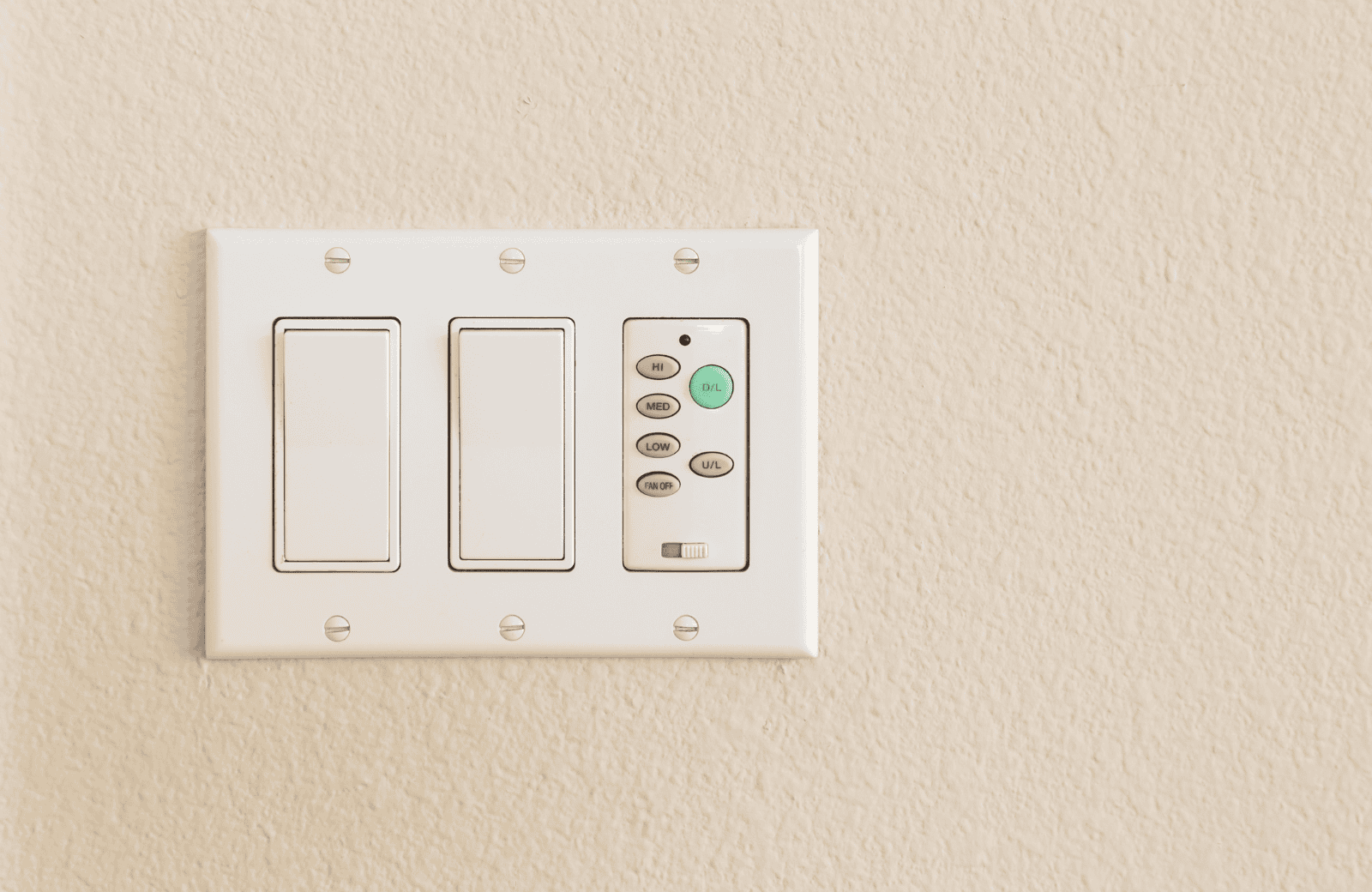
How you want to control the fan changes the wiring behind the wall. A pull chain needs nothing extra. Separate wall control of fan speed and light usually needs an additional conductor.
- Pull chain only: no switch work, lowest cost.
- Single switch with remote: modest cost, remote handles speed and light.
- Dual wall control: requires a three conductor cable if one is not already present.
- Smart control: adds device cost and setup time, works well with existing neutral wiring.
The Fan You Choose
Fan price ranges enormously, from budget builder models to designer units with integrated lighting. Motor quality is where the money shows up in daily life.
According to ENERGY STAR, certified ceiling fans run up to 44 percent more efficient than conventional models. Better motors and blade design do the work. The details sit on the ENERGY STAR ceiling fans page. That gap matters on a fan you run every day for a decade.
Permits and Inspections
A straight replacement generally does not require a permit. New circuits and new wiring often do, depending on your municipality in the Triangle.
We handle permitting when the scope calls for it and build it into the estimate rather than surprising you later. Work that passes inspection the first time is the whole point.
Cost Factors at a Glance
| Factor | Adds Little | Adds Moderately | Adds the Most |
|---|---|---|---|
| Ceiling height | Eight to nine feet | Ten to twelve feet | Vaulted or two story |
| Existing box | Fan rated already | Light box needs swap | No box at all |
| Wiring | Circuit in place | Switch leg added | New circuit run |
| Attic access | Open attic above | Tight attic | Finished space above |
| Controls | Pull chain | Remote receiver | Dual wall switches |
| Number of fans | Several in one visit | Two fans | One isolated fan |
Notice the last row. Installing four fans in one visit costs far less per fan than four separate visits. Setup and travel spread across the whole project.
Does a Ceiling Fan Actually Save You Money?
Yes, when you use it correctly. The Department of Energy notes that a ceiling fan lets you raise the thermostat about four degrees Fahrenheit. Your comfort stays the same.
In a Raleigh summer that is a meaningful shift in how hard your air conditioner works. The savings show up on the cooling side of your bill month after month.
One rule matters more than any other. Fans cool people, not rooms, because the effect comes from air moving across your skin. Running a fan in an empty room spends energy and returns nothing, so turn it off when you leave.
Winter Use Is the Part People Forget
Most fans have a reverse switch on the motor housing. Running the fan slowly in reverse pushes warm air off the ceiling and back down the walls.
That helps most in rooms with high ceilings, where heat collects far above where you live. It is a free adjustment that many homeowners never touch.
Choosing the Right Fan Size for Each Room
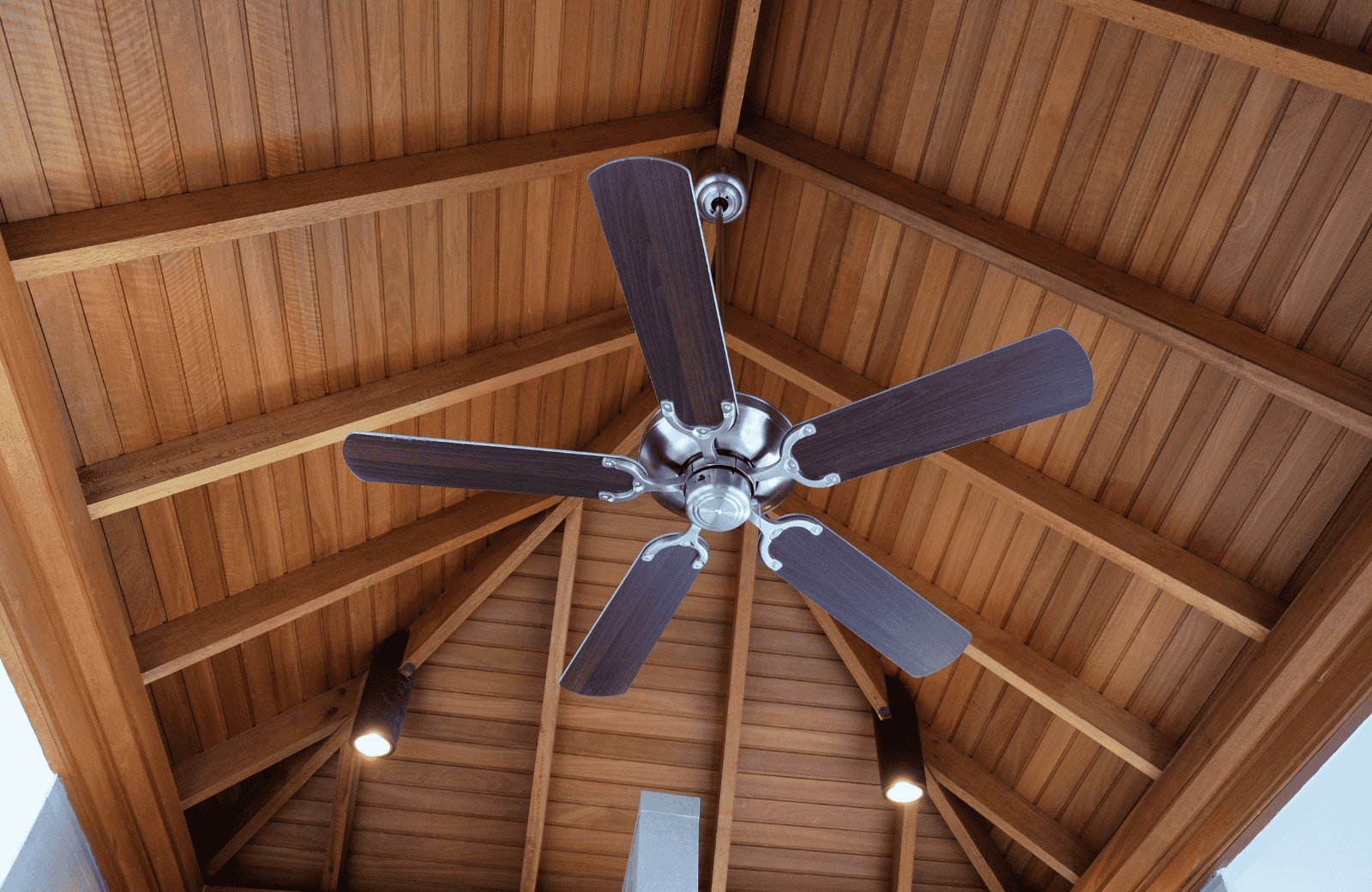
An undersized fan in a large room moves air you cannot feel. An oversized fan in a small bedroom feels like weather.
| Room Size | Typical Rooms | Suggested Blade Span |
|---|---|---|
| Up to 75 square feet | Bathroom, small office | 29 to 36 inches |
| 76 to 144 square feet | Bedroom, kitchen | 36 to 44 inches |
| 145 to 225 square feet | Primary bedroom, dining | 44 to 54 inches |
| 226 to 400 square feet | Living room, den | 54 to 60 inches |
| Over 400 square feet | Great room, shop | 60 inches or two fans |
Covered porches and screened rooms need a fan rated for damp locations. Anywhere exposed to direct rain needs a wet rated unit, and that rating is not optional.
What Happens During a Professional Installation
Knowing the sequence helps you understand where the labor hours go. Here is how a typical visit unfolds.
| Stage | What Happens | Typical Time |
|---|---|---|
| Walkthrough | Confirm location, height, and control preference | 10 minutes |
| Power down | Shut off and verify the circuit is dead | 5 minutes |
| Removal | Take down the old fixture, inspect box and wiring | 15 minutes |
| Support | Install or confirm a fan rated box anchored to structure | 20 to 60 minutes |
| Assembly | Build the fan, set downrod length, connect conductors | 30 to 45 minutes |
| Balance and test | Run every speed, check wobble, verify controls | 15 minutes |
| Cleanup | Haul the old unit, clear the packaging, protect floors | 10 minutes |
A clean replacement often finishes inside ninety minutes. New wiring in a tricky location can occupy most of a day.
Mistakes That Cost You More Later
Nearly every expensive fan problem we repair started as a small shortcut. These are the ones we see most often across Raleigh, Cary, and Durham.
Hanging a Fan on a Light Box
The fan may stay up for a year, or five. Then the screws work loose from vibration and a heavy object comes down from your ceiling.
Skipping the Balance Step
A wobble is not just annoying. It loosens connections, wears the motor bearings, and shortens the life of the fan considerably.
Ignoring the Room Above
Fans installed directly below a bathroom or laundry sometimes sit near plumbing. We check what is above before cutting, which avoids an expensive second trade visit.
Overloading an Old Circuit
Adding several fans to a circuit that already carries lighting and outlets invites nuisance tripping. Older Triangle homes with original panels feel this quickly. That is usually a sign to look at capacity as a whole.
Frequently Asked Questions
How long does it take to install a ceiling fan?
A straight replacement where a fan rated box already exists usually takes 60 to 90 minutes. Replacing a light fixture with a fan runs closer to two hours because the box has to be changed. Brand new installations with fresh wiring take three to six hours. Attic access and cable distance drive that range.
Can I put a ceiling fan where a light fixture is now?
Yes, in almost every case, but the electrical box has to be replaced first. Standard lighting boxes are not built to carry the weight or the vibration of a spinning fan. We install a listed fan rated box anchored to a joist or a brace, then mount the fan to that.
Do I need a permit to install a ceiling fan in North Carolina?
Replacing an existing fan on existing wiring generally does not require a permit. Running new circuits or new wiring to serve a fan often does, and requirements vary between Wake and Durham counties. We confirm the local requirement before the work begins and pull the permit when one applies.
Why does my ceiling fan wobble?
Wobble usually traces back to three things. A loose mounting box, unbalanced blades, or a bent blade bracket. A balancing kit fixes many cases in about fifteen minutes. Did the wobble start suddenly? Stop using the fan and have the mounting checked, because hardware may be coming loose.
What size ceiling fan do I need for my room?
Measure the room in square feet and match it to blade span. A bedroom of roughly 12 by 12 feet suits a 44 inch fan. A living room over 300 square feet needs 54 to 60 inches. Rooms longer than about 18 feet often work better with two smaller fans than one large one.
Should my ceiling fan spin clockwise or counterclockwise?
In summer, run the fan counterclockwise when you look up at it. That pushes air down and creates a breeze on your skin. In winter, reverse it to clockwise on a low speed. Warm air near the ceiling then circulates back down without a draft. Nearly every fan has a small switch on the motor housing for this.
Getting Your Fan Installed the Right Way
A ceiling fan is one of the smallest investments that changes how a room feels every single day. A good install shows up in the quiet and the balance. It also shows up in the years you never think about it again.
What We Bring to Your Project
We have served Raleigh, Cary, Durham, and the surrounding Triangle for more than fifteen years. Our indoor electrical services cover ceiling fans, switches, dimmers, and outlets. One visit handles the fan and everything around it.
You receive clear pricing before we start and work that passes inspection the first time. No vague ranges once the ladder is already up.
Fans and Lighting Together
Many fan projects begin as lighting projects. Does the room feel dim as well as stuffy? Our lighting design and installation team can plan the whole room at once.
Doing both in a single visit saves you money. It also spares you a second day waiting on a truck.
Safety Is Never the Line Item We Trim
Every fan we hang goes on a properly rated, properly anchored box. Every connection gets checked before the cover goes back on.
If we find something concerning in the box, we tell you plainly and explain your options. That is what fifteen years of five star work in the Triangle is built on.
Ready for a Real Number?
Call us at 919 229 9778 and describe your room. We will tell you which of the three project types you have. Then we explain what it takes to do it right.
You can also reach us through our contact page and we will get back to you. Ask about our free estimate, and about the free outlet and switch inspection included with every indoor electrical service.